The ultimate baking guide for beginners will help you learn the basics of baking with simple tips, essential tools, and easy techniques. Baking is one of the most enjoyable and rewarding kitchen skills you can learn. Whether you want to bake delicious cakes, cookies, muffins, or fresh bread, the right knowledge can make the process simple and fun. Many beginners believe baking is difficult, but with a few basic techniques and the right ingredients, anyone can create homemade treats that taste amazing.
What Is Baking?
This ultimate baking guide for beginners covers everything you need to know before you start. From essential baking tools and ingredients to common mistakes and helpful tips, this guide will give you the confidence to bake successfully from your very first recipe.
Baking is a cooking method that uses dry heat, usually inside an oven, to prepare food. Unlike frying or boiling, baking allows ingredients to cook slowly and evenly. Therefore, Cakes rise, cookies become crispy, and bread develops a golden crust because of the heat inside the oven.
In fact, baking combines science and creativity. Following the correct measurements and techniques helps produce consistent and delicious results every time.
Why Learn Baking?
There are many benefits to learning how to bake:
- Save money by making desserts at home.
- Control the quality of ingredients.
- Create healthier versions of your favorite treats.
- Impress family and friends with homemade baked goods.
- Develop a relaxing and creative hobby.
- In addition, celebrate birthdays and special occasions with homemade cakes.
Furthermore, baking is also a great way to spend quality time with children and family members.
Essential Baking Ingredients
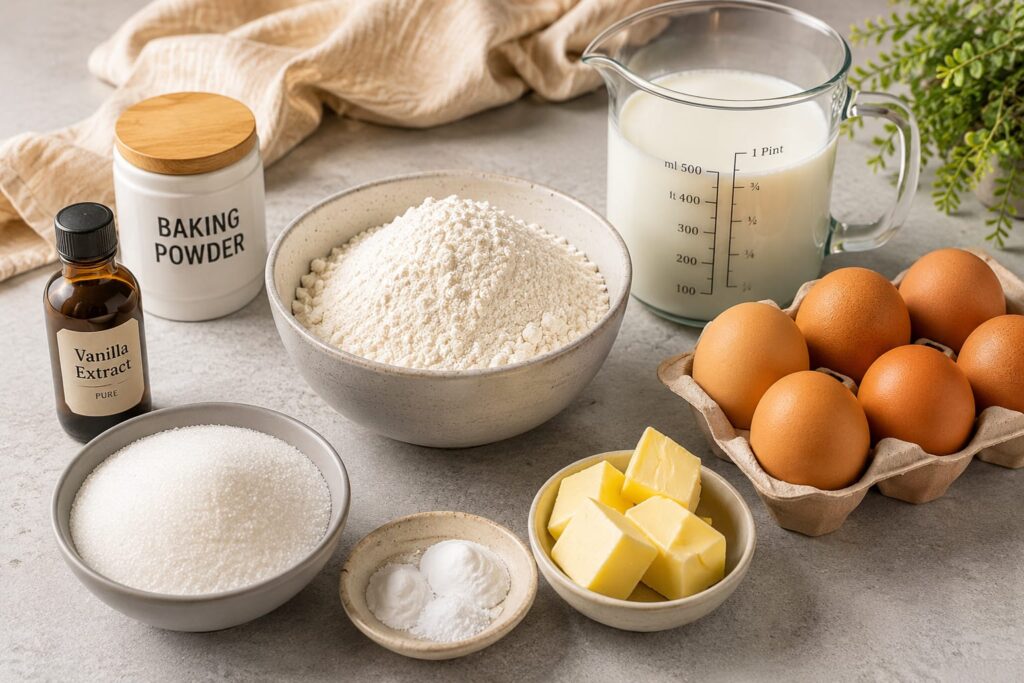
Every beginner should keep these basic ingredients in the kitchen.
- Flour
Flour forms the foundation of most baked goods.
Common types include:
- All-purpose flour
- Cake flour
- Bread flour
- Whole wheat flour
For example, different recipes require different types of flour because each contains varying amounts of protein.
- Sugar
Sugar provides sweetness and helps create texture.
Popular options include:
- White sugar
- Brown sugar
- Powdered sugar
- Caster sugar
In addition, brown sugar adds moisture and a rich flavor, while powdered sugar is perfect for frosting.
- Eggs
Eggs help bind ingredients together while simultaneously, adding moisture, structure, and richness.
Always use fresh eggs for the best baking results.
- Butter
Butter gives baked goods a rich flavor and soft texture.
Generally, unsalted butter is preferred because it allows better control over the salt content.
- Baking Powder
Baking powder helps cakes, muffins, and pancakes rise.
Therefore, always check the expiration date because old baking powder loses its effectiveness.
- Baking Soda
Baking soda reacts with acidic ingredients like yogurt, lemon juice, or vinegar. As a result, it creates bubbles that help baked goods rise.
- Salt
Even sweet recipes need a small amount of salt.
This is because, salt balances sweetness and enhances flavor.
- Milk
Milk adds moisture and improves texture.
Recipes may use whole milk, low-fat milk, or alternatively, plant-based options.
- Vanilla Extract
Vanilla extract is one of the most popular baking flavors.
Indeed, just a small amount makes cakes, cookies, and cupcakes taste much better.
Essential Baking Equipment
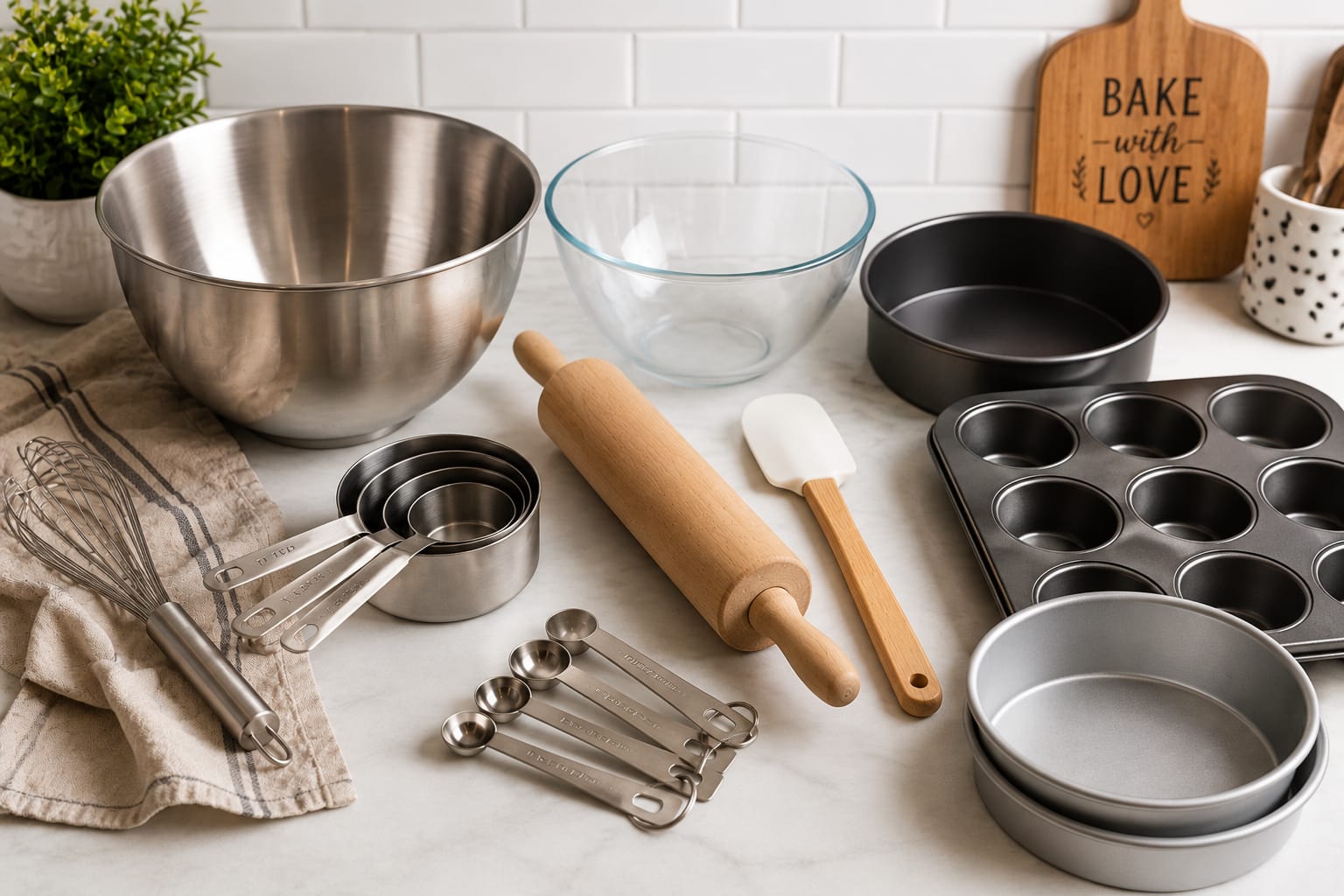
You don’t need an expensive kitchen to begin baking.
Useful tools include:
- Measuring cups
- Measuring spoons
- Mixing bowls
- Electric hand mixer
- Whisk
- Rubber spatula
- Baking trays
- Cake pans
- Muffin tins
- Cooling rack
- Rolling pin
- Parchment paper
- Kitchen scale
- Oven thermometer
Investing in quality baking tools makes baking easier and more enjoyable.
Understanding Baking Measurements
Baking requires accurate measurements.
Unlike cooking, guessing ingredient amounts often leads to poor results.
For this reason, always:
- Level flour with a knife.
- Use dry measuring cups for flour and sugar.
- Use liquid measuring cups for milk and oil.
- Measure ingredients before mixing.
A digital kitchen scale provides the most accurate measurements.
Preparing Before Baking
Before turning on the oven:
- Read the recipe completely.
- Gather all ingredients.
- Measure everything first.
- Preheat the oven.
- Grease baking pans if needed.
- Check ingredient freshness.
Preparation helps prevent mistakes during baking.
Ready to start your baking journey? If you have any questions or need baking guidance, feel free to visit our Contact Us page.
Basic Baking Techniques
Creaming Butter and Sugar
Cream butter and sugar until light and fluffy.
This step adds air, making cakes soft and tender.
Folding
Fold ingredients gently using a spatula.
This keeps the batter light without removing trapped air.
Mixing
However, Do not over mix cake batter.
over-mixing develops too much gluten, making cakes dense and tough.
Sifting
Sifting flour removes lumps and evenly distributes baking powder or cocoa powder.
Common Baking Mistakes Beginners Make
Incorrect Measurements
Too much flour creates dry baked goods.
Too little flour causes cakes to collapse.
Skipping Oven Preheating
Always preheat your oven before baking.
Cold ovens affect baking time and texture.
Opening the Oven Too Early
Opening the oven door frequently releases heat.
This may cause cakes to sink in the middle.
Using Expired Ingredients
Old baking powder or baking soda won’t produce enough rise.
Over Backing
Leave baked goods in the oven only until done.
over-baking removes moisture and creates dry cakes.
Beginner-Friendly Baking Recipes
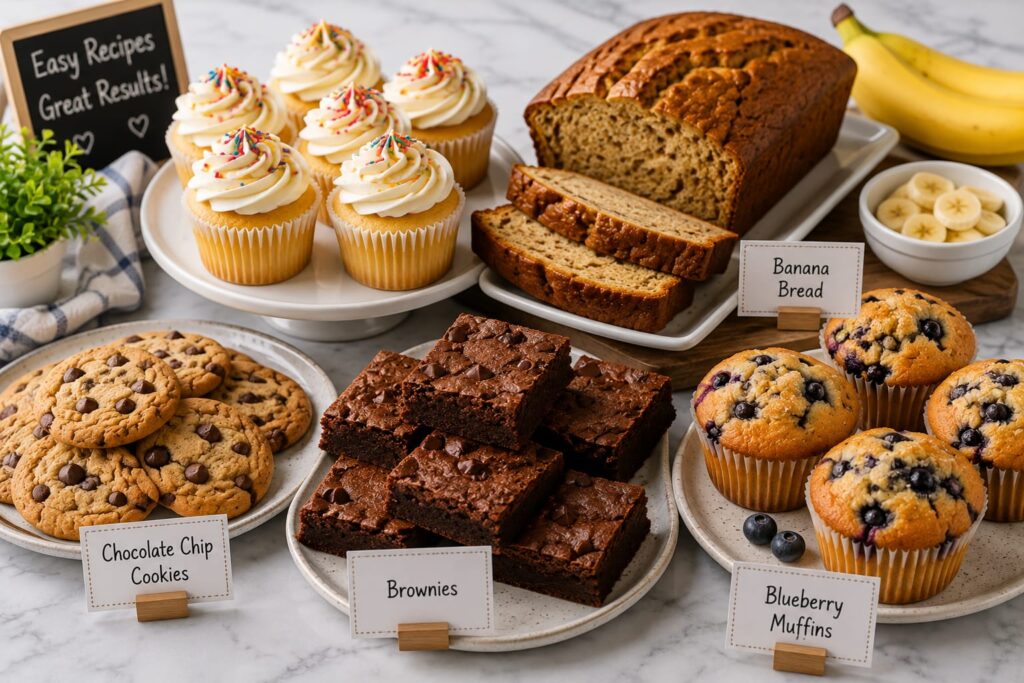
If you’re just starting, try these easy recipes:
- Vanilla cupcakes
- Chocolate chip cookies
- Banana bread
- Blueberry muffins
- Brownies
- Basic sponge cake
- Sugar cookies
These recipes help build confidence while practicing essential baking techniques.
Baking Safety Tips
Stay safe in the kitchen by following these tips:
- Wear oven mitts.
- Keep children away from hot ovens.
- Handle sharp tools carefully.
- Turn off the oven after baking.
- Keep your workspace clean.
- Store ingredients properly.
Safety is an important part of successful baking.
Tips for Better Baking Results
Follow these expert tips:
- Use room-temperature ingredients.
- Measure accurately.
- Read recipes carefully.
- Use quality ingredients.
- Rotate baking trays if needed.
- Let cakes cool before frosting.
- Practice regularly.
Small improvements lead to consistently better results.
How to Store Baked Goods
Proper storage keeps baked goods fresh longer.
Cakes
Store in an airtight container at room temperature for up to three days.
Cookies
Keep in a sealed container for about one week.
Bread
Wrap tightly and store in a bread box or airtight bag.
Muffins
Store in airtight containers and enjoy within three days.
Some baked goods can also be frozen for later use.
Decorating Basics for Beginners
Once you’re comfortable baking, try simple decorating techniques.
Ideas include:
- Buttercream frosting
- Chocolate drizzle
- Fresh fruit toppings
- Powdered sugar dusting
- Colorful sprinkles
- Whipped cream
- Simple piping designs
Practice improves decorating skills over time.
How to Improve Your Baking Skills
The best bakers continue learning.
Ways to improve include:
- Bake regularly.
- Try one new recipe each week.
- Learn from mistakes.
- Watch professional baking tutorials.
- Experiment with flavors.
- Keep notes about successful recipes.
Confidence grows with every baking experience.
Frequently Asked Questions
Is baking difficult for beginners?
No. Starting with simple recipes and following instructions carefully makes baking easy to learn.
Can I bake without an electric mixer?
Yes. Many recipes can be mixed using a whisk or wooden spoon.
Why did my cake sink?
Common reasons include opening the oven too early, over-mixing, or using expired baking powder.
Why are my cookies hard?
over-baking or adding too much flour can make cookies hard instead of soft.
How can I become better at baking?
Practice consistently, follow recipes carefully, and learn basic baking techniques.
Leave a Reply